The Secret War: Laos
A little bit of history about the homeland.
From 1893 to 1954, Laos was a part of French IndoChina (Laos, Vietnam & Cambodia). This meant that all three countries were ruled by France with the political and economic center mainly focused in Vietnam. Also, during this period, Laos was the most underdeveloped of the three countries.
A bit of trivia: during WWII, Laos was actually occupied by Japan, but after Japan’s surrender in 1945, France reasserted control. However, independence movements grew stronger with time and communist influence began during this time. The Lao Issara Movement took place 1945-1949. Nationalist leaders formed the “Free Lao” movement to resist the French return. The movement included both the royalists and the leftists. Pathet Lao, the communist and guerilla movement, was founded in 1950. This movement had close ties to the Vietnamese communist (Viet Minh). Led by Prince Souphanouvong, it worked closely with Ho Chi Minh’s movement in Vietnam. It was also supported by Lao People’s Revolutionary Party (LPRP).
The 1954 Geneva Accords ended the First Indochina War (the war between France and the Viet Minh). Laos was declared an independent, neutral kingdom. The result became a country divided when Prathet Lao retained control of two provinces in Northern Laos. The royal government maintained control of the other provinces. Thus, the struggle for power began.
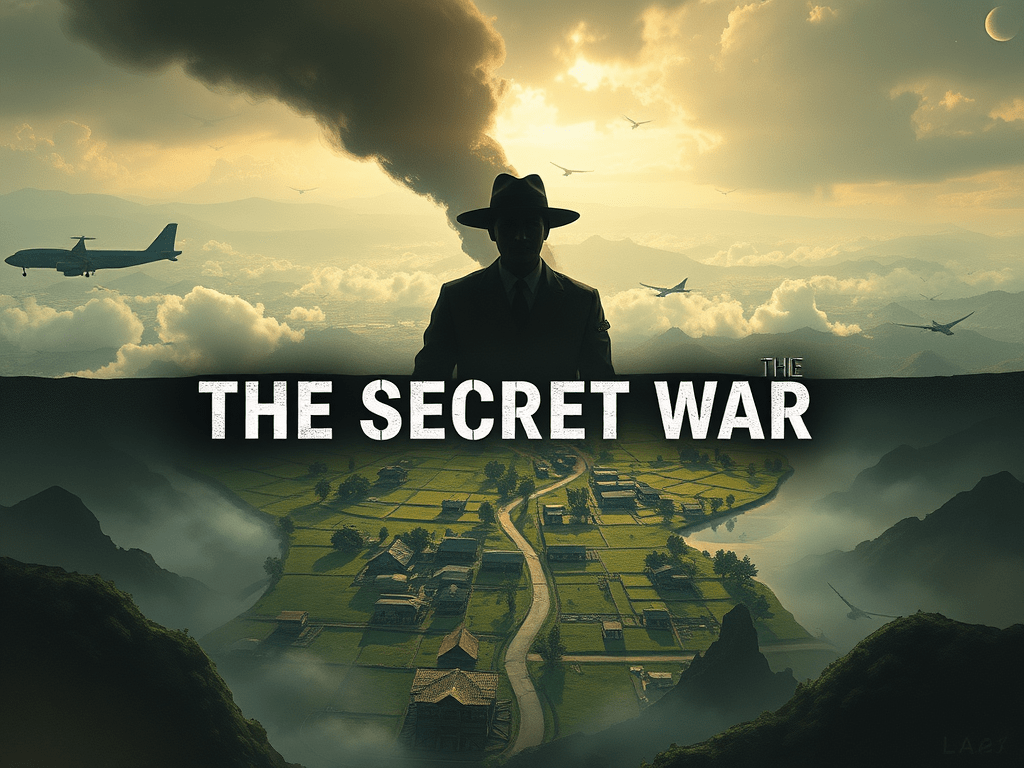
The struggle for power led to the Lao Civil War (1959-1975), sometimes called the “secret war” as it was not as well known as the Vietnam War (1955-1975). It was a long and brutal conflict between the royalists (backed by the U.S.) and Pathet Lao (supported by North Vietnam and the Soviet Union). During this time, Laos became one of the most heavily bombed countries in history due to the U.S. airstrikes aimed at cutting off the Ho Chi Minh Trail (a vital supply route running through Laos).
The 1973 Paris Peace Accords were aimed at ending the Vietnam War, which also affected Laos. The Accords called for a coalition government between royalists and communists. However, the tensions continued. April of 1975 was the fall of Saigon. South Vietnam fell to the communists, and there was a strong momentum shift in Laos.
On December 2, 1975, Pathet Lao took full control and abolished the monarchy. Kaysone Phomvihane was now the leader of the Lao People’s Democratic Republic (LPDR). The royal family was arrested and King Savang later died in captivity (in a “re-education” camp) under harsh conditions.
Thus, in the late 1970s and early 1980s, there was a massive exodus of Lao people. People may have fled for a variety of reasons because of the shifting political climate.
- Political Repression – The new communist government targeted anyone associated with the old monarchy, the U.S., or the Royal Lao Government. Many military officier, civil servants, intellectuals, and their families were sent to re-education camps, where conditions were harsh and many died.
- Fear of Persecution – Ethnic minorities, like the Hmong, who had fought alongside the CIA during the “Secret War,” were heavily persecuted. Many feared imprisonment or execution.
- Economic Hardship – Collectivization of farms, loss of private property, and food shortages made survival very difficult. Many families saw no future for their children under the communist system.
Some of the routes of escape included crossing the Mekong River (which separated Laos from Thailand) or going through the mountains on foot (crossing into northern Thailand). Once they reached Thailand, refugees were placed in camps. These camps were often overcrowded, and life was harsh, but they became temporary homes for tens of thousands of Lao and Hmong.
After time spent in these refugee camps, a large number chose to resettle abroad. The largest number of refugees chose to resettle in the United States (especially in states like Minnesota, California, Wisconsin, and North Carolina). France, because of colonial ties, saw many educated families resettle there. Smaller communities can be found in Canada, Australia, and other countries. In total, over 300,000 Lao people fled the country between the mid-1970s and early 1990s, a huge number considering the population of Laos at the time was only 3-4 million.
AFTERMATH
Laos became a one-party communist state under the Lao People’s Revolutionary Party. Close ties with the Soviet Union and Vietnam shaped Laos’ politics and economy. Many Laotians, especially the Hmong and royalists, fled the country, resettling in Thailand, the US, France, and other countries. This is one of the main reasons why there are large Lao and Hmong communities abroad.
A lot happened to the Lao people during this time. Families were often split – some stayed behind, some were captured, and some made it out. There was the trauma of crossing the Mekong River. A lot of people lost their loved ones. And even harder yet, starting life over in a foreign country, where it was likely that language was a barrier. These things all still shape Lao diaspora communities today. Despite all this, many Lao refugees rebuilt their lives and created strong communities abroad while keeping their traditions alive.
CROSSING THE MEKONG
Crossing the Mekong River during the Lao Diaspora (late 1970s-1980s), when my family crossed, was one of the most perilous parts of escaping. For many families, it was literally a matter of life or death.
The most famous crossing point was Vientiane → Nong Khai, Thailand. Here, the Mekong is wide, but that didn’t stop the thousands of Lao (royalists, educated elites, ordinary families) from crossing. Once across, refugees were often taken to the Nong Khai Refugee Camp. Many were primarily ethnic Lao Loum (lowland Lao), consisting of former officials, teachers, students, businesspeople, or families connected to the old Royal Lao Government. There were some Hmong and other ethnic groups, but most of the Hmong ended up at Ban Vinai (further north). At its peak, the camp held tens of thousands of refugees.
The camps were not great as they were designed to be temporary. There was overcrowding because of the thousands of arrivals; families would live in bamboo huts or tents, and the conditions were hot, muddy in the rainy season, and often unsanitary. Food and water were provided by aid organizations like UNHCR (United Nations High Commissioner for Refugees), but supplies were limited. The camps were surrounded by barbed wire and guarded by Thai soldiers, so the refugees could not freely leave. Volunteer teachers and aid groups help set up makeshift schools. Churches, temples, and cultural centers helped to preserve tradition. Overall, though, these camps were a waiting game…where they were all just waiting for approval to be resettled in the U.S., France, Canada, or Australia. There was a constant feeling of uncertainty – not knowing if they’d be sent back, stuck in limbo, or accepted abroad.
During this time, some refugees were sent to the Philippines Refugee Processing Center (PRPC) in Bataan, Philippines. The PRPC was opened in 1980 with support from the U.S. and UNHCR. It was a “second stop” camp for those who were approved and accepted for resettlement in the U.S., Canada, Australia or Europe. The main goal of PRPC was to teach the refugees English, basic job skills, and cultural orientation before they moved to their new countries. While at the PRPC, refugees would take English classes (intensive lessons focused on survival English for work, shopping, school, and daily life), have cultural training (learning about Western customs, laws and expectations), and develop basic job skills (basic vocational training). The conditions were better than the Thai refugee camps. There was less overcrowding, it was safer, and it was more organized. The PRPC officially closed in the 1990s as refugee resettlement slowed down.
Once in their destination countries, refugees could start their new lives. However, all of this came at a price as they faced culture shock, language barriers, and poverty. Despite all their hardships, trials, and tribulations, many have been able to build strong communities and preserve their traditions while adapting to life abroad.
Dangers of the Mekong Crossing
- Strong Currents & Width
- The Mekong is wide (up to a mile across in some areas) with powerful currents.
- People often tried to cross at night to avoid guards, which made swimming or navigating small boats even harder.
- Many could not swim well, and children or the elderly were especially vulnerable.
- The Mekong is wide (up to a mile across in some areas) with powerful currents.
- Patrolling Soldiers
- Lao and Vietnamese border guards monitored crossings. Refugees risked being shot on sight if caught in the river or along the banks.
- There are survivor accounts of families hiding underwater, holding their breath among reeds, to avoid detection.
- Lao and Vietnamese border guards monitored crossings. Refugees risked being shot on sight if caught in the river or along the banks.
- Unstable Boats & Rafts
- Refugees used whatever they could find: makeshift bamboo rafts, inner tubes, or tiny fishing boats.
- Overcrowding often caused boats to capsize.
- Refugees used whatever they could find: makeshift bamboo rafts, inner tubes, or tiny fishing boats.
- Wildlife & Natural Hazards
- The Mekong has dangerous wildlife like crocodiles (in some stretches), snakes, and disease-carrying water.
- Sharp rocks and sudden whirlpools posed risks too.
- The Mekong has dangerous wildlife like crocodiles (in some stretches), snakes, and disease-carrying water.
- Separation & Loss
- Families sometimes crossed in groups at different times to avoid attention. Many were separated forever if one group was caught.
- There are stories of parents carrying infants across on their backs while swimming, or tying children to bamboo poles to keep them afloat.
- Families sometimes crossed in groups at different times to avoid attention. Many were separated forever if one group was caught.
How Dangerous?
- Thousands of deaths are believed to have happened during crossings. Exact numbers are unknown because the communist government suppressed information.
- Refugees often described it as the scariest moment of their lives. Survivors say they could hear gunfire behind them and the cries of people drowning in the dark.
- For those who made it, reaching the Thai side was often met with both relief and fear — Thai authorities sometimes pushed people back, though many were eventually taken to refugee camps.
A Survivor’s Memory (paraphrased from oral histories)
“We left at midnight. My father carried me on his shoulders, and my mother held my baby sister. We could hear the soldiers shouting on the Lao side. My uncle’s boat tipped over, and we never saw him again. When we finally reached the Thai side, we crawled onto the sand and kissed the ground. We were alive.”
 Eat. Drink. Explore